
Why I Chose This Certification Path
AI is no longer something sitting off to the side as an emerging trend. It is actively reshaping how people work, how organizations operate, and how Microsoft 365 environments are evolving. As tools like Copilot become more embedded into day-to-day work, it becomes increasingly important to understand not just what these tools can do, but how they should be used, governed, and aligned to real business value.
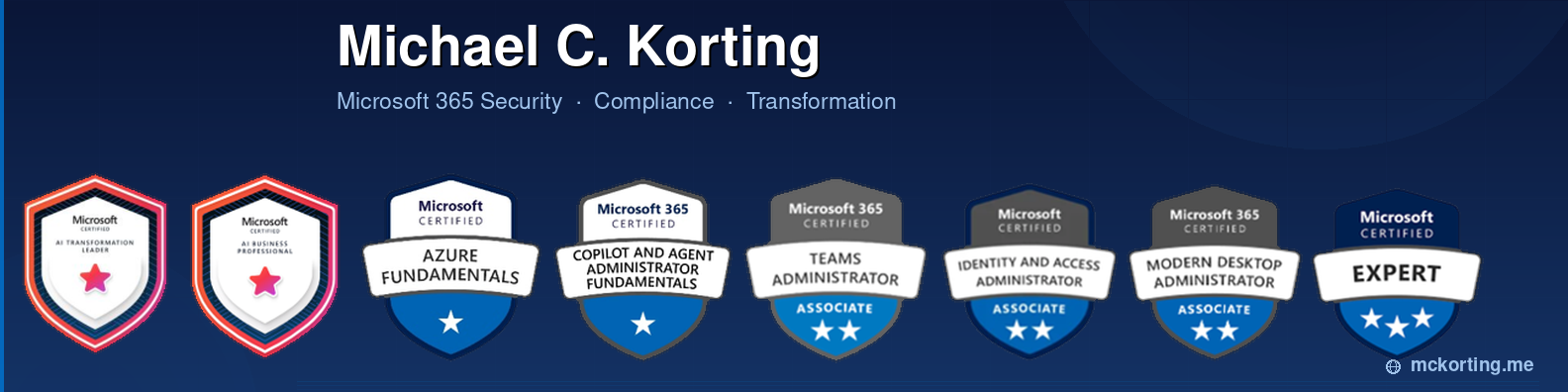
That was the main reason I decided to pursue this certification track:
- AB-900
- AB-730
- AB-731
My goal was not simply to collect badges or pass exams. I wanted to build a structured understanding of AI across three layers:
- Foundational concepts
- Business application
- Organizational transformation
That progression turned out to be one of the most valuable parts of the experience.
The Certifications and What Each One Added
AB-900: Establishing the Foundation
AB-900 provided the essential starting point. It helped frame the core concepts around AI, Microsoft Copilot, responsible AI, and the general ways these technologies are being positioned within the Microsoft ecosystem.
At this level, the value is clarity. AI can feel broad and abstract when viewed only through headlines or vendor messaging. AB-900 helps create a practical baseline by focusing on concepts such as:
- What AI is and how it is being applied
- How generative AI differs from traditional automation
- Where Copilot fits into the Microsoft stack
- Why responsible AI matters from the beginning
For me, this was the point where AI started to feel less like a buzzword and more like a real discipline with clear business and technical implications.
AB-730: Connecting AI to Business Outcomes
AB-730 added the layer that many organizations are still trying to work through right now: how to connect AI capability to real business value.
This was where the conversation moved beyond “what AI is” and into “why it matters” in a workplace setting. It introduced more of the strategic and practical thinking needed to evaluate use cases, identify impact, and communicate value to stakeholders.
This exam path helped reinforce areas such as:
- Recognizing where AI can improve productivity
- Understanding use cases across business functions
- Thinking in terms of outcomes rather than novelty
- Positioning AI as a business enabler instead of just a technical tool
That is especially useful in modern workplaces where success often depends on how well technology supports daily work, communication, decision-making, and collaboration.
AB-731: Leading AI Transformation
AB-731 extended the journey into the leadership and transformation space. This is where the conversation becomes broader than individual use and starts to focus on organizational readiness, change management, governance, and long-term adoption.
This was one of the most valuable parts of the overall path because many AI conversations are still too narrow. Organizations often start by focusing on the tool itself, but long-term success requires much more:
- A clear adoption strategy
- Executive and business alignment
- Responsible governance
- User readiness and enablement
- A realistic understanding of where AI fits and where it does not
AB-731 helped reinforce that AI transformation is not simply a technical deployment. It is a workplace evolution that needs structure, leadership, and intentional planning.
How I Studied
Throughout this journey, I studied the Microsoft Learn paths associated with each certification. That gave me a structured and consistent approach, while also helping me avoid the trap of studying only isolated exam topics.
What I appreciated most about using Microsoft Learn was that the content naturally followed the maturity progression of the certifications. Instead of trying to piece together scattered information from random sources, I was able to move from fundamentals into business value and then into transformation-oriented thinking in a way that felt connected.
My study approach was relatively straightforward:
- Work through the official learning paths in full
- Take notes around real-world relevance, not just exam terms
- Map concepts back to actual workplace scenarios
- Review how AI impacts collaboration, productivity, and governance
- Reinforce concepts by thinking about practical implementation challenges
That last part mattered quite a bit. I found it much more helpful to ask questions such as:
- How would this show up in a real Microsoft 365 environment?
- How would leadership measure success here?
- What would users need to understand before adoption?
- What risks would need to be addressed early?
Studying that way made the content more meaningful and made it easier to retain.
Real-World Benefits of This Track
1. It Builds a Strong Starting Point for an AI Journey
One of the biggest strengths of this certification track is that it gives people a realistic entry point into AI. There is a lot of pressure right now to “get started with AI,” but many people are being pushed into that conversation without enough structure.
This track gives that structure. It helps develop:
- Foundational understanding
- Business context
- Strategic perspective
- Awareness of governance and adoption considerations
For anyone trying to understand how AI fits into Microsoft 365, business operations, or digital workplace transformation, this creates an excellent base.
2. It Improves the Quality of AI Conversations
Another major benefit is the ability to have better conversations with different audiences. After working through these certifications, it becomes easier to communicate about AI in ways that resonate with:
- Technical teams
- Business stakeholders
- Leadership
- End users
That matters because success with AI in the workplace is rarely just about technical capability. It often depends on whether people understand the purpose, trust the approach, and can connect the tool to meaningful outcomes.
3. It Supports Success in the Modern Workplace
The modern workplace is increasingly defined by information overload, rapid context switching, and rising expectations around productivity. Employees are expected to summarize more, write faster, find information sooner, and make decisions with better context.
AI has the potential to support that shift, but only if it is used well.
This certification track helps frame AI not as a shortcut, but as a practical workplace capability that can support:
- Better knowledge access
- Faster drafting and summarization
- Improved decision support
- More effective collaboration
- Smarter use of Microsoft 365 tools
In that sense, the path is not just about certification preparation. It is about becoming more effective in the kind of workplace many organizations are already moving toward.
4. It Reinforces the Need for Governance and Responsible Adoption
One of the themes that stood out throughout the journey was that AI success is not only about enablement. It is also about guardrails. Responsible use, governance, and leadership awareness are all critical if AI is going to be adopted well.
This is especially important in enterprise environments where data sensitivity, compliance requirements, security concerns, and change management all play a significant role.
That perspective is one of the reasons I found this track valuable. It encourages a more mature view of AI adoption from the beginning.
What I Took Away from the Experience
Looking back, one of the biggest benefits of pursuing AB-900, AB-730, and AB-731 together is that they form a coherent story.
They are not just isolated exams. Together, they help answer a broader set of questions:
- What is AI in the Microsoft ecosystem?
- How does it create value in business settings?
- What does successful adoption actually require?
That progression is what makes this path especially useful for anyone beginning or expanding their AI journey.
For me, the experience reinforced a few key ideas:
- AI readiness starts with clear fundamentals
- Business value matters just as much as technical capability
- Transformation requires governance, communication, and leadership
- Modern workplace success depends on practical, responsible AI adoption
Who I Think This Path Is Best For
I would especially recommend this path to people who want a practical and business-relevant way to start building AI knowledge, including:
- Microsoft 365 professionals
- IT administrators and engineers
- Business analysts
- Consultants
- Technology leaders
- Anyone helping organizations explore AI adoption
It is also a strong option for people who want to better understand how Copilot and AI fit into the broader future of work rather than viewing them as disconnected tools.
Final Thoughts
I am glad I took this certification path. It gave me a more complete understanding of AI, a stronger way to think about real-world workplace impact, and a better framework for discussing AI adoption in practical terms.
If you are looking for a solid way to get started on your AI journey, especially within the Microsoft ecosystem, AB-900, AB-730, and AB-731 create a strong progression from foundational knowledge to business value to transformation thinking.
In a workplace increasingly shaped by AI, that combination is not just useful. It is timely.