Why this transition matters
For those of us who have spent years building careers around Microsoft 365 administration, the announcement that MS-102: Microsoft 365 Administrator is retiring in October 2026 feels like the end of an era. MS-102 has represented more than another exam to study for. It has been a credential tied directly to the work many of us perform every day across Microsoft 365 tenant administration, identity, security, compliance, and cross-workload governance.
Microsoft certification paths have always evolved, but this change stands out because the replacement direction is not simply a refreshed Microsoft 365 Administrator Expert exam. The new path points toward AB-650: Administering Microsoft 365 and AI Services, which supports the Microsoft 365 Certified: AI Services Administrator Associate certification. That is a meaningful shift in both focus and level.
The value MS-102 has represented
The Microsoft 365 Administrator Expert path has been valuable because it validated the way Microsoft 365 is actually managed in real organizations. Administrators and consultants rarely work on only one isolated workload. A licensing decision can affect security. A Conditional Access policy can affect device access. A Defender setting can affect operations. A Purview configuration can affect collaboration. A SharePoint governance choice can affect Copilot readiness.
That is why MS-102 mattered. It encouraged administrators to think across the tenant rather than in silos. It connected identity, security, compliance, collaboration, endpoint strategy, and operational governance into one professional discipline.
For consultants, it also served as a useful credibility marker. When speaking with customers about Microsoft 365 strategy, MS-102 helped show that the conversation was grounded in more than product familiarity. It represented a working understanding of how the platform fits together.
Enter AB-650
The new direction with AB-650 reflects where Microsoft is clearly taking the ecosystem. Microsoft 365 administration is no longer just about users, groups, mailboxes, devices, policies, and compliance controls. It is increasingly about how AI services interact with business data, how agents are governed, how Copilot is administered, and how organizations safely enable AI-powered productivity.
That is not a small change. AI services introduce new administrative responsibilities around access, data exposure, lifecycle management, governance, and responsible use. The administrator role is expanding from managing productivity platforms to managing AI-enabled productivity platforms.
Why this is not just about collecting another badge
I have never viewed certifications as simply collecting logos for a resume or profile. The real value is in the learning process. Certification preparation forces you to look at product areas you may not touch every day. It exposes gaps. It creates structure. It helps connect features to real-world scenarios.
That has been true for my Microsoft 365, Teams, Endpoint, Identity, Security, Compliance, and Applied Skills work. It will be true for AI services as well. The platform is changing, and the only practical response is to keep learning.
So my plan is straightforward: I want to work on AB-650 when it becomes publicly available and use it as a way to strengthen my understanding of Microsoft 365 AI administration, Copilot governance, AI service security, and the operational side of managing AI inside the tenant.
Looking beyond AB-650
The bigger question is what comes next from an expert-level perspective. If MS-102 is retiring and AB-650 is an associate-level credential, then the natural next step is to look for other expert-level paths that align with where Microsoft is going.
One credential that has my attention is AB-100: Agentic AI Business Solutions Architect. This certification aligns with a much more strategic and architectural role. It focuses on designing AI-driven business solutions, agentic-first processes, multi-agent orchestration, governance, enterprise integration, and measurable business outcomes.
That direction feels much closer to the type of advanced certification challenge I want to pursue. It is not only about administering a feature. It is about understanding how AI, agents, business applications, governance, and architecture come together to support real business transformation.
The prerequisite path matters
Advanced certifications are rarely isolated accomplishments. They usually build on a foundation. For AB-100, the supporting certifications and prerequisite path matter because they help establish the technical and functional background needed for the larger architecture conversation.
That means my learning path will likely include more attention to areas such as Microsoft AI services, Copilot Studio, Power Platform, Dynamics 365, agent development, AI governance, information protection, data loss prevention, and responsible AI practices. Those areas are becoming increasingly connected.
What this means for Microsoft 365 professionals
For Microsoft 365 administrators, consultants, and architects, this transition is a reminder that our roles are changing. The fundamentals still matter. Identity still matters. Security still matters. Compliance still matters. Endpoint management still matters. Tenant governance still matters.
But those skills now need to be applied in an AI-enabled environment. The next generation of Microsoft 365 work will require professionals who can bridge traditional administration with AI governance and business enablement.
That is where I see the opportunity. The retirement of MS-102 may close one chapter, but it also opens a new one. The challenge is to carry forward the depth of Microsoft 365 administration while adding the AI skills that customers and organizations will increasingly need.
Final thoughts
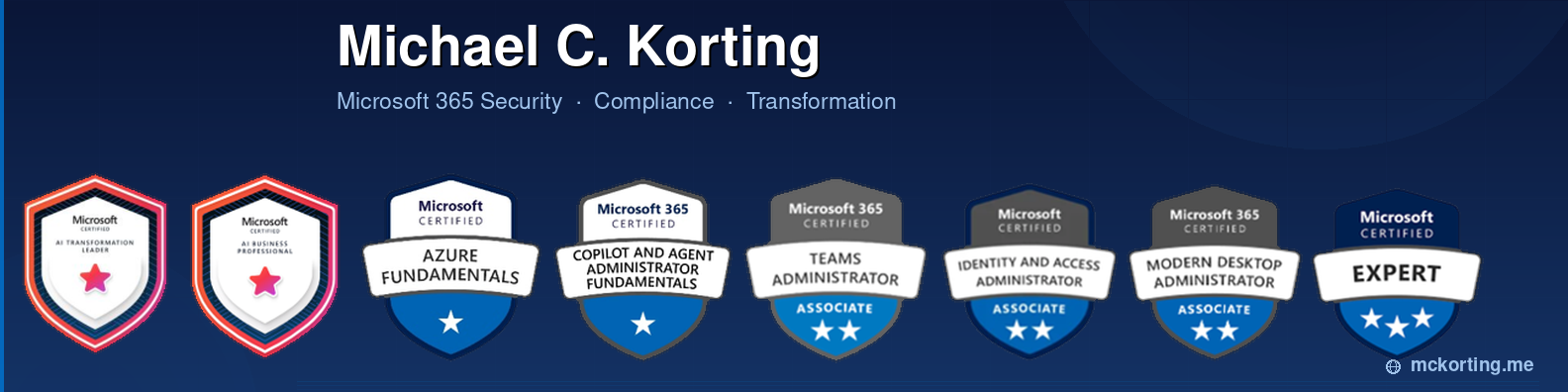
I am proud to have earned and renewed MS-102. It remains one of the Microsoft certifications I value most because it aligns so closely with real-world Microsoft 365 consulting and administration. Even after the exam retires, that knowledge does not disappear.
At the same time, I do not want to stand still. My plan is to continue maintaining my existing certifications, pursue AB-650 when it becomes available, and then look toward expert-level goals such as AB-100 and the supporting prerequisite certifications required to get there.
The certification name may change. The platform may change. The exam numbers may change. But the commitment to learning does not.